

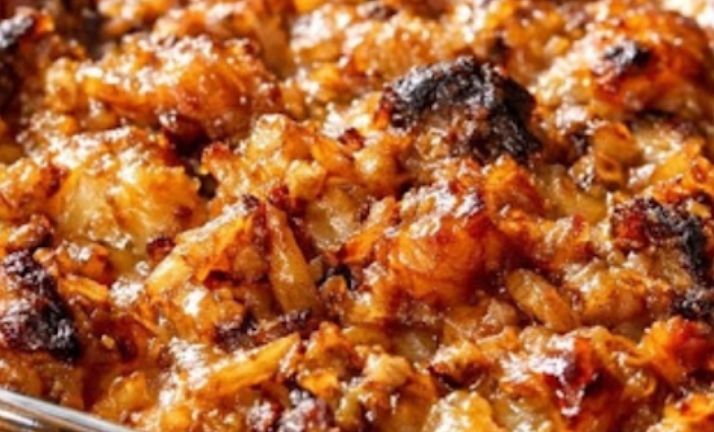
There is a quiet reverence in meals prepared for Good Friday—simple, meatless, and deeply comforting. This Golden Crusted Casserole honors that tradition with grace: a creamy, savory filling topped with a buttery, cracker-crumb crust that bakes to a crisp, golden finish. With just four pantry staples and minimal hands-on time, it delivers the kind of nostalgic, unpretentious comfort that has anchored Lenten tables and family suppers for generations. No elaborate techniques, no long ingredient lists—just honest food, gently baked and ready to share.
Cultural Context
During Lent, particularly on Fridays, many Christian households have historically observed meatless meals, turning instead to pantry staples like canned fish, condensed soups, and crackers. This casserole emerged in mid-century American kitchens as a practical yet satisfying solution for those observances. Condensed cream soup provided rich binding, canned fish offered lean protein, and crushed buttery crackers created a golden crust that replaced more labor-intensive breadcrumbs or pastry. It was a dish born of resourcefulness, faith, and the quiet understanding that simplicity, when done well, can feed both body and spirit. This recipe preserves that legacy: a testament to how humble ingredients, when combined with care, become timeless comfort.
Why You’ll Love This Recipe
Only four core ingredients, all easily accessible
Fifteen minutes of active prep, entirely hands-off during baking
Rich, creamy interior with a crisp, golden cracker topping
Naturally meatless, making it ideal for Lenten observances or light suppers
Budget-friendly and consistently feeds six generously
Minimal cleanup with a single baking dish
Ingredients
Home4-Ingredient Good Friday Golden Crusted Casserole
4-Ingredient Good Friday Golden Crusted Casserole
Ingredients
(Serves 6 | 9×13-inch baking dish)
2 (10 oz) cans white fish (tuna, salmon, or cod), thoroughly drained
1 (10.75 oz) can condensed cream of mushroom or cream of celery soup
1½ cups crushed buttery round crackers (such as Ritz or saltines)
¼ cup (½ stick) unsalted butter, melted
Optional: Pinch of freshly ground black pepper, a squeeze of lemon juice, or chopped fresh parsley for finishing
Step-by-Step Instructions
Prep & Preheat: Position a rack in the center of your oven and preheat to 350°F (175°C). Lightly grease a 9×13-inch baking dish with butter or cooking spray.
Make the Filling: In a medium bowl, combine the thoroughly drained canned fish and condensed soup. Fold gently with a spatula until just combined. Avoid overmixing or breaking the fish into tiny pieces; keeping some texture preserves the dish’s heartiness. Spread the mixture evenly into the prepared baking dish.
Prepare the Topping: In a separate bowl, combine the crushed crackers and melted butter. Toss until the crumbs are evenly coated and resemble wet sand. Sprinkle the mixture uniformly over the fish base, pressing lightly so it adheres without compacting.
Bake to Golden Perfection: Place the dish in the preheated oven and bake for 25–30 minutes, until the edges are gently bubbling and the cracker topping is deeply golden and crisp. Avoid overbaking; the fish should remain moist and tender beneath the crust.
Rest & Serve: Remove from the oven and let the casserole rest for 5–10 minutes before serving. This brief pause allows the filling to set slightly, ensuring clean portions and a cohesive texture. Garnish with fresh parsley or a light squeeze of lemon if desired. Serve warm.
Serving Suggestions
Classic pairings: Steamed green beans, roasted asparagus, or a simple mixed green salad with a bright vinaigrette
Lenten accompaniments: Crusty bread, buttered dinner rolls, or a light tomato-basil soup for a comforting, meatless supper
Fresh accents: Lemon wedges on the side, a sprinkle of cracked black pepper, or a handful of chopped chives
Beverage matches: Crisp white wine (Sauvignon Blanc or Pinot Grigio), lightly hopped lager, or chilled herbal tea
Occasion-ready: Good Friday suppers, Lenten weeknights, light family dinners, or budget-friendly potluck contributions
You Must Know
Drain the fish thoroughly: Excess liquid will make the casserole soggy and prevent the filling from setting. Press gently with a fork or paper towels to remove as much moisture as possible.
Crush crackers by hand: Pre-ground crumbs pack too densely. Hand-crushing creates uneven pieces that toast beautifully and deliver the signature vintage crunch.
Use full-fat condensed soup: Reduced-fat versions contain more water and stabilizers, which can cause the sauce to separate or become thin during baking.
Watch the bake time closely: Ovens vary. The casserole is done when the crust is golden and the edges bubble. Overbaking dries out the fish and hardens the topping.
Rest before slicing: Cutting immediately releases steam and makes the layers slide apart. The 5–10 minute rest is essential for clean, cohesive servings.
Storage Tips
Refrigerator: Store cooled leftovers in an airtight container for up to 3 days. The cracker topping will soften over time but remains flavorful.
Freezer: Not recommended. Dairy-based casseroles with crumb toppings become soggy and lose texture when frozen and thawed.
Reheating: Warm individual portions in a 325°F oven for 10–12 minutes to restore crispness, or microwave in 30-second intervals with a damp paper towel to retain moisture.
Make-ahead strategy: Assemble the casserole up to 4 hours in advance, cover tightly, and refrigerate. Add 5–7 minutes to the bake time if starting cold. For best results, add the cracker topping just before baking to prevent sogginess.
Avoid repeated reheating: Reheat only what you plan to eat to maintain texture and food safety.
Frequently Asked Questions
Q: Can I use fresh or frozen fish instead of canned?
A: Yes. Poach or bake 12–14 oz of fresh white fish until just cooked, flake gently, and proceed with the recipe. Adjust salt and pepper accordingly, as fresh fish lacks the seasoning found in canned varieties.
Q: Why condensed soup instead of making a roux-based sauce?
A: Condensed soup provides a reliable balance of creaminess, seasoning, and starch in one convenient ingredient. It simplifies the process while ensuring a cohesive, comforting texture that holds up well during baking.
Q: Can I use a different type of cracker?
A: Buttery round crackers like Ritz or saltines work best for their melt-in-your-mouth texture and mild saltiness. Avoid heavily flavored or seeded crackers, which can overpower the delicate fish and soup base.
Q: Is this recipe naturally dairy-free or gluten-free?
A: Not as written. Substitute condensed soup with a dairy-free cream alternative, use plant-based butter, and replace crackers with certified gluten-free buttery crackers to adapt it. The method remains identical.
Q: Can I add vegetables to the filling?
A: Yes. Fold in 1 cup of lightly cooked peas, finely chopped spinach, or sautéed onions for added nutrition. Ensure vegetables are thoroughly drained to prevent excess moisture.
Allergy Information
Contains: Fish, gluten (crackers), dairy (condensed soup, butter)
Naturally: Egg-free, nut-free
Substitutions:
Gluten-free: Use certified gluten-free crackers and verify soup ingredients
Dairy-free: Replace soup with a plant-based cream alternative, use vegan butter, and dairy-free crackers if needed
Fish-free: Substitute with cooked, flaked white beans or cauliflower for a vegetarian Lenten alternative (note: texture and flavor will shift)
Always verify packaging for allergen statements and cross-contact warnings, as formulations vary by manufacturer and region.
4-Ingredient Good Friday Golden Crusted Casserole is a quiet tribute to the beauty of simplicity. It does not demand precision, exotic ingredients, or hours in the kitchen. It only asks for a few honest staples, a gentle hand, and the patience to let the oven do its work. In return, it delivers a dish that feels both deeply familiar and profoundly comforting—a reminder that tradition often lives in the smallest, most unassuming meals.
Make it for a Lenten supper, serve it to guests who appreciate unpretentious cooking, or simply keep it ready for weeknights that call for something light, nourishing, and effortlessly satisfying. If you try this recipe, I would love to hear how you serve it. Did you add a squeeze of lemon? Pair it with a crisp green salad? Share your kitchen story, and if you know someone who still treasures the quiet elegance of simple, faith-rooted meals, pass this along.
Because sometimes, the most meaningful dishes aren’t about doing more. They’re about honoring tradition, trusting humble ingredients, and gathering around a table where simplicity feels like a blessing